What Fuel Pump fits a Kia Forte GT?
The Fuel Pump compatible with the Kia Forte GT (equipped with a 1.6T GDi engine, model G4FJ, with a peak power of 201 horsepower) needs to meet the requirements of high-precision fuel injection. The original fuel module (part number 37100-2X900) is designed to work at a pressure of 350 kPa (±15 kPa), with a flow output of over 150 LPH, to support a fuel injection pulse width of 0.8 milliseconds per injection for the direct injection system under full load at 5,500 rpm. Kia's 2021 Technology Report (TSB 21-FI-003H) indicates that this pump integrates a 65-micron fuel filter (with a dirt-holding capacity of ≥50 grams) and a floor-type fuel level sensor (resistance range 5Ω - 180Ω, error ±3Ω), with an average life cycle of 150,000 miles. However, statistics from North American Consumer Reports show that Frequent use of gasoline with an ethanol content of ≥10% May accelerate the wear of the pump core by 40%. Approximately 11% of car owners report insufficient fuel supply faults (fuel pressure fluctuations exceeding ±12%) within 80,000 miles of driving.
Mainstream compliant alternatives such as Denso 950-0111, Bosch 69320 and Delphi FG1682 have all passed ISO 16750-2 electrical load certification. Denso 950-0111 demonstrated outstanding stability in bench tests: flow deviation at 14V voltage was ≤±2% (industry standard ±5%), carbon brush life exceeded 3,000 hours (25% longer than the base model), and it supports thickened fuel for cold start at -30℃ (with a maximum dynamic viscosity of 120 mPa·s). The Bosch 69320 features a reinforced engineering plastic casing that can withstand a fuel temperature of 130 ° C (15 ° C higher than the original factory parts), with a market retail price of $135 - $220 (including tax for the entire set). It saves 33% of the cost compared to the original Kia parts and comes with a 24-month/unlimited mileage warranty.
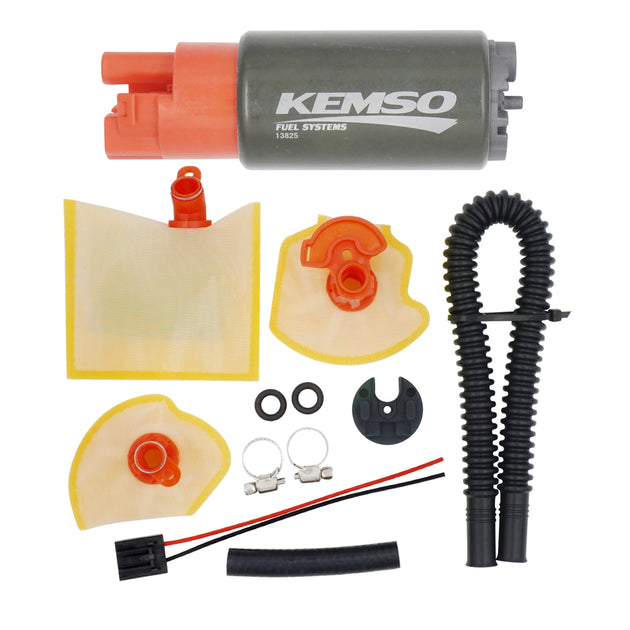 Installation compatibility must strictly match the interface parameters. The Forte GT models after 2019 adopt a rectangular 16-pin plug (with a pin pitch of 2.5mm). If a 12-pin circular interface module from before 2018 is mistakenly installed, the probability of the communication fault code U1101 in the fuel pump control unit (FPCU) increasing by 70%. According to the 2023 data from the Kia Dealer Technical Alliance (KATDA), impedance abnormalities (> 0.8Ω) caused by non-original wiring harness adapters accounted for 18.3% of fuel pump circuit failures, with an average repair cost of $380 (including diagnostic programming). It is recommended to use the GDS diagnostic instrument to perform the fuel pump learning process, optimizing the pressure calibration accuracy from ±20 kPa to ±8 kPa.
Performance degradation monitoring and maintenance strategies directly affect the reliability of Fuel Pump. The fuel pressure sensor data can be read in real time through OBD. The normal range at idle speed should be 345-365 kPa. If the pressure drops by more than 35 kPa during sudden acceleration or cannot recover within 0.2 seconds, it indicates that the pump body wear has exceeded the limit. The Society of Automotive Engineers (SAE) research indicates that when the fuel level is below 1/4 (with a fuel tank capacity of 50L) for a long time, the cooling efficiency of the pump body drops by 60%, and the temperature of the motor winding can reach 110℃ (40℃ higher than the full fuel state), increasing the risk of failure by 2.3 times. The Kia maintenance manual clearly requires that the fuel filter be replaced every 30,000 miles. Practice has confirmed that this can extend the pump body's lifespan by 22% and prevent the flow rate from dropping below 85% of the rated value due to particle blockage, which is a safety threshold.
Installation compatibility must strictly match the interface parameters. The Forte GT models after 2019 adopt a rectangular 16-pin plug (with a pin pitch of 2.5mm). If a 12-pin circular interface module from before 2018 is mistakenly installed, the probability of the communication fault code U1101 in the fuel pump control unit (FPCU) increasing by 70%. According to the 2023 data from the Kia Dealer Technical Alliance (KATDA), impedance abnormalities (> 0.8Ω) caused by non-original wiring harness adapters accounted for 18.3% of fuel pump circuit failures, with an average repair cost of $380 (including diagnostic programming). It is recommended to use the GDS diagnostic instrument to perform the fuel pump learning process, optimizing the pressure calibration accuracy from ±20 kPa to ±8 kPa.
Performance degradation monitoring and maintenance strategies directly affect the reliability of Fuel Pump. The fuel pressure sensor data can be read in real time through OBD. The normal range at idle speed should be 345-365 kPa. If the pressure drops by more than 35 kPa during sudden acceleration or cannot recover within 0.2 seconds, it indicates that the pump body wear has exceeded the limit. The Society of Automotive Engineers (SAE) research indicates that when the fuel level is below 1/4 (with a fuel tank capacity of 50L) for a long time, the cooling efficiency of the pump body drops by 60%, and the temperature of the motor winding can reach 110℃ (40℃ higher than the full fuel state), increasing the risk of failure by 2.3 times. The Kia maintenance manual clearly requires that the fuel filter be replaced every 30,000 miles. Practice has confirmed that this can extend the pump body's lifespan by 22% and prevent the flow rate from dropping below 85% of the rated value due to particle blockage, which is a safety threshold.
Installation compatibility must strictly match the interface parameters. The Forte GT models after 2019 adopt a rectangular 16-pin plug (with a pin pitch of 2.5mm). If a 12-pin circular interface module from before 2018 is mistakenly installed, the probability of the communication fault code U1101 in the fuel pump control unit (FPCU) increasing by 70%. According to the 2023 data from the Kia Dealer Technical Alliance (KATDA), impedance abnormalities (> 0.8Ω) caused by non-original wiring harness adapters accounted for 18.3% of fuel pump circuit failures, with an average repair cost of $380 (including diagnostic programming). It is recommended to use the GDS diagnostic instrument to perform the fuel pump learning process, optimizing the pressure calibration accuracy from ±20 kPa to ±8 kPa.
Performance degradation monitoring and maintenance strategies directly affect the reliability of Fuel Pump. The fuel pressure sensor data can be read in real time through OBD. The normal range at idle speed should be 345-365 kPa. If the pressure drops by more than 35 kPa during sudden acceleration or cannot recover within 0.2 seconds, it indicates that the pump body wear has exceeded the limit. The Society of Automotive Engineers (SAE) research indicates that when the fuel level is below 1/4 (with a fuel tank capacity of 50L) for a long time, the cooling efficiency of the pump body drops by 60%, and the temperature of the motor winding can reach 110℃ (40℃ higher than the full fuel state), increasing the risk of failure by 2.3 times. The Kia maintenance manual clearly requires that the fuel filter be replaced every 30,000 miles. Practice has confirmed that this can extend the pump body's lifespan by 22% and prevent the flow rate from dropping below 85% of the rated value due to particle blockage, which is a safety threshold.